
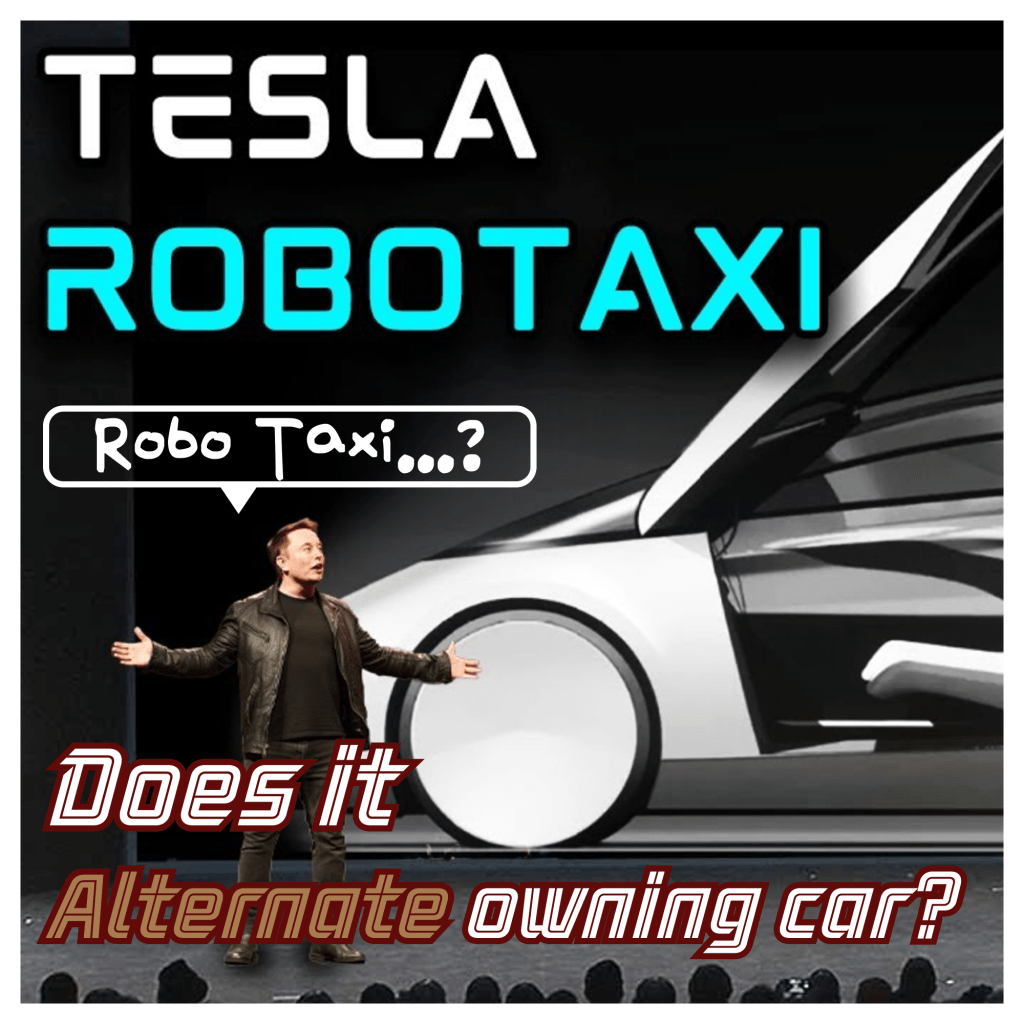
A few days ago, Tesla delayed the announcement of its Robo taxis, causing the company’s stock prices to plummet. This reaction shows just how much people are excited about the potential of Robo taxis as a mobility innovation. Many experts believe these autonomous vehicles could revolutionize how we think about car ownership, possibly leading to a future where fewer people own cars.
What do you think? Did Tesla’s stock drop because people see so much potential in Robo taxis, or is there another reason for the drop? Let’s dig into the Robo taxis.
Robo taxis have significant potential as a new revenue stream for automotive companies. The U.S. taxi market, which includes traditional cabs, limousines, and ride-sharing services like Uber and Lyft, is worth around $42.8 billion. This figure is substantial, though it’s about half of Tesla’s revenue and a quarter of Ford’s. However, Uber’s profit margin is only about 3.6%, indicating that entering the taxi market with Robo taxis might not be hugely profitable. While the market could grow, the widespread desire to own cars could limit this growth.
Opinions are divided on this issue. Some car experts argue that Robo taxis will encourage people to use shared autonomous vehicles instead of owning cars, especially in densely populated areas. Do you agree with this prediction?
Personally, I don’t. There are two main reasons: people’s inherent desire for ownership and the new possibilities opened up by autonomous driving.
People’s desires play a crucial role in shaping the future, and the idea that Robo taxis will replace private car ownership overlooks these desires. Ownership is a natural human instinct, as numerous studies have shown (e.g., Gintis, H. (2007), Pierce, J. L., Kostova, T., & Dirks, K. T. (2001)). From a commercial perspective, desires can be categorized into three types: utilitarian, hedonic, and symbolic, which relate to practical use, pleasure, and self-expression.
Robo taxis don’t fully meet these needs. On a utilitarian level, people often use their cars as storage or for carrying items, which Robo taxis can’t accommodate. While some argue that Robo taxis offer convenience by being available on demand, this misunderstands how taxi services already work. People already call taxis when they need them, but scheduling and availability issues can still lead to inefficiency and inconvenience.
When it comes to hedonic and symbolic desires, the situation is even more challenging for Robo taxis. The comfort and familiarity, which from the basis of hedonic desire, provided by personal car offer a sense of security, especially for activities like road trips or off-road adventures. Symbolically, owning a car can be a form of self-expression. Buying a Mustang, for example, can reflect one’s identity, whereas renting one can’t offer the same sense of ownership and personal connection.
If the desire for possession is innate, then Robo taxis can’t replace car ownership. This ties into the real significance behind Robo taxis: the potential of autonomous driving. As autonomous driving becomes more advanced, cars could transform into new types of personal spaces, like mini theaters or gaming rooms or your own garden. In such a future, buying a personal vehicle that meets your specific desires might be more appealing than using a Robo taxi.
So, why did Tesla’s stock price drop? It’s not just about the potential of Robo taxis. It’s about the broader implications of autonomous driving technology. People are eagerly awaiting the perfection of Tesla’s Full Self-Driving (FSD) system, and the introduction of Robo taxis could be a step toward that future.
 Car-in-a brain
Leave a comment